My first day in Korea, I froze in front of a bus driver for a solid three seconds.
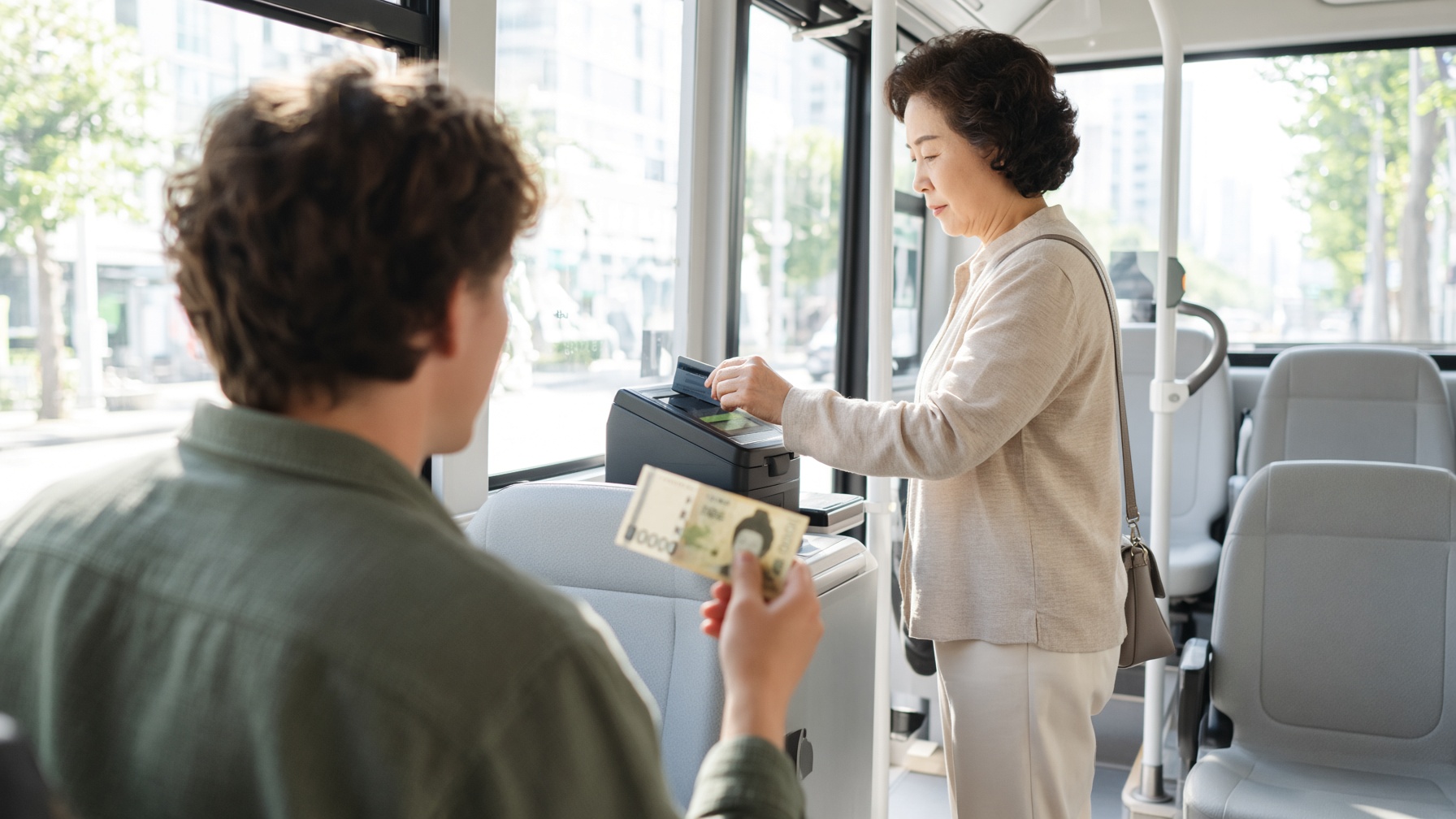
I was holding a 10,000 won bill. The fare was around 1,500 won.
Standing there holding a bill
I went to put the money in, and the driver waved his hand at me.
He couldn't make change for a 10,000. Putting bills in the fare box is technically allowed — the driver just has no way to give change back. Everybody rides with a card.
Come to think of it, buses in my hometown stopped taking cash entirely a few years back. I ride those with a card too. And here I was, pulling out a bill.
Anyway, I didn't have a card, and people were lining up behind me. I had no idea what to do, so I just stood there holding my 10,000.
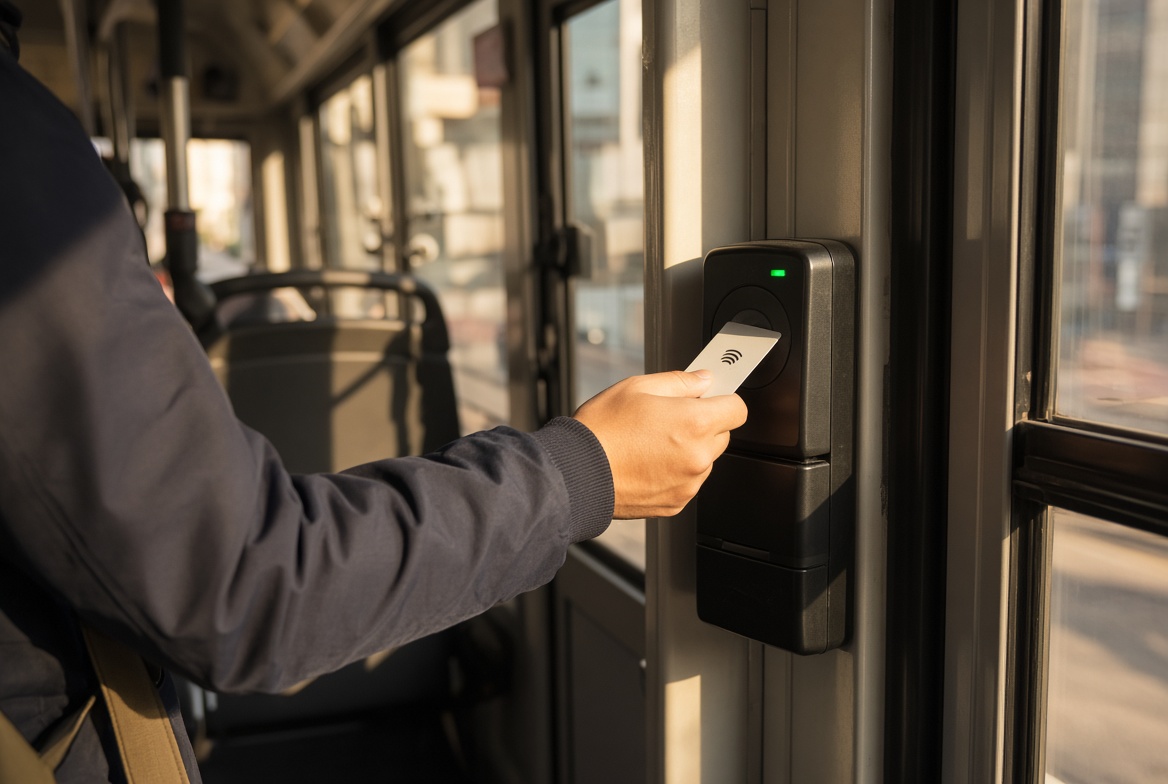
Then a middle-aged woman from the line came forward, tapped her own card on the reader, and paid my fare for me.
I held out my bill. She waved it off and told me to just go sit down.
At that point I knew exactly one thing to say.
I said it a few more times on my way to the seat. It was all I could say, and she just smiled and waved like it was nothing.
That's still my clearest memory. And that's the day I learned: to ride a bus in Korea, the card comes first.
So what does everyone use?
A transit card. It's called T-money.
Every convenience store has them. CU, GS25, 7-Eleven, emart24 — all of them. They hang right next to the register, you can't miss them.
But the second I grabbed a card, the clerk asked me this.
That's when it clicked. Buying the card and putting money on it are two separate things. The card is an empty container. The money goes in separately.
In Korea, when you buy the card, they usually ask about loading it in the same breath, so you can knock out both at once. You just say how much.
I had no idea how much was reasonable at first, so I loaded 10,000 won. It was gone in a few days. Put in around 20,000 and you can stop thinking about it for a while.
The things I got wrong
| What I assumed | What's actually true |
|---|---|
| Pay with a bill, get change back | There is no change. Easier to just buy the card first |
| Buy the card, use it right away | Loading is a separate step (usually done together at purchase) |
| I'll get the card price refunded later | Nope. You're buying the card itself |
| I can load it with my credit card | Lots of machines are cash-only |
That last one sneaks up on you. I tried to load at a subway station machine with my credit card and got stuck all over again. Some convenience stores take cards for it, but it varies store to store. Honestly, just carrying some bills around is the low-stress option.
It's not just for buses
I thought of this as a bus card, but a few days later I took the subway and figured it out. The same card works on the subway, as is. Taxis too. You can even pay with it at convenience stores.
A card bought in Seoul works on the Busan subway. No need to buy a new one per city.
So my recommendation: buy one the moment you land. There are convenience stores on the arrivals floor at Incheon Airport. That one card covers all your transit for the day.
The real problem was something else
Harder than buying the card was getting the words out at the register.
I knew "교통카드 주세요" in my head — the whole phrase, ready to go. Then I looked at the clerk's face and nothing came out. I ended up pointing.
Words you've memorized with your eyes and words you've actually said out loud are genuinely different things. Ever since, I practice out loud a few times before I go in.
What tripped you up most on your first day in Korea? This was mine.