
Japanese has the exact same goodbye, so I assumed I could carry it straight over.
I thought it was a nice thing to say
I'd been at my Korean company for about two months.
Everyone said "수고하셨습니다" (sugohasyeossumnida) on their way out. I heard it all day, from every direction. It seemed like a kind thing to say — it acknowledges that someone worked hard.
Japanese has a word for exactly this slot: お疲れさまでした (otsukaresama deshita, "you must be tired"). Nearly the same meaning, used at the same moment, leaving work. And — this is the important part — it's perfectly fine to say to your department head.
So I used the Korean one without a second thought.
My boss smiled and said "네, 들어가요" — sure, get home safe. But a senior coworker nearby glanced at me.
The next day, she told me
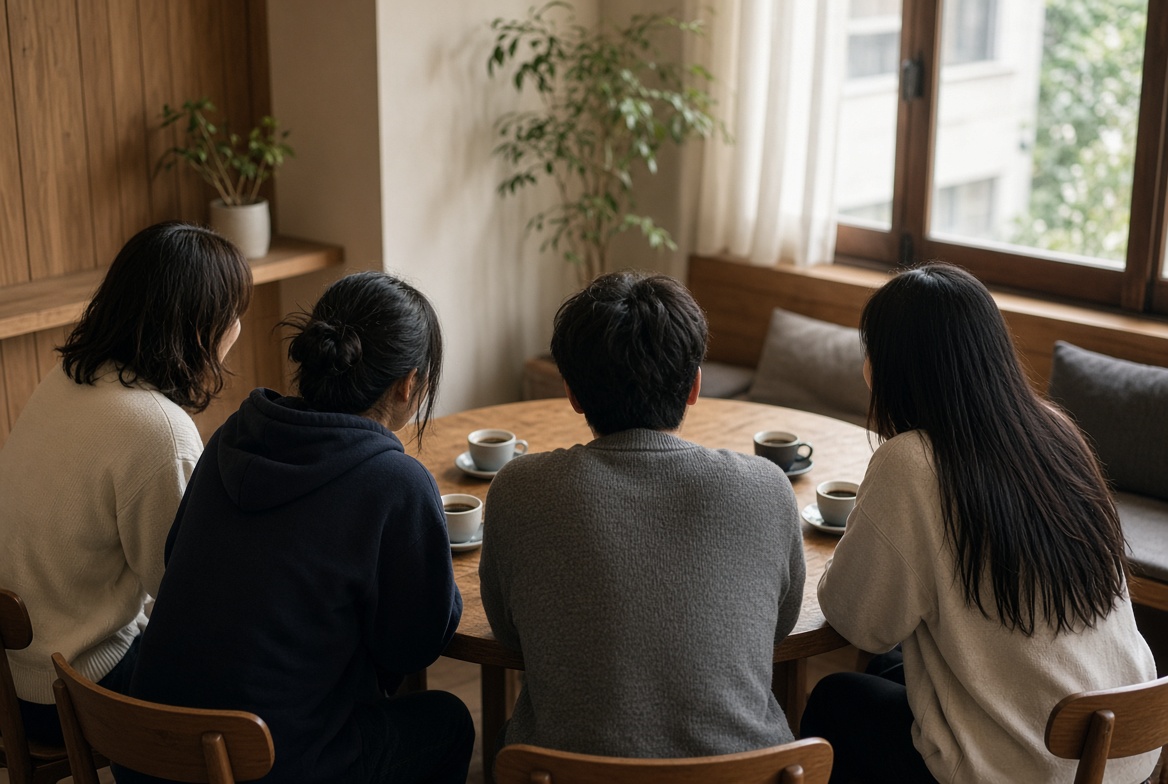
Over coffee, she brought it up carefully.
"That thing yesterday… we don't really say that to the department head."
수고 is originally a word for juniors and coworkers, she said.
It's a word that acknowledges someone's hard work — and the acknowledging is done from above. Coming from a junior, it sounds like you're grading your superior's day.
I asked her: so was what I said rude?
She waved her hand. "Not that bad." In practice everyone says it, and the boss probably didn't even register it. It's just better avoided in formal situations, that's all.
I looked it up later, and the National Institute of Korean Language does say not to use it with superiors. But in the office, everyone just does. It's one of those places where the rule and the reality don't match.
But the real trap was something else
She pointed out one more thing. Same word, but the weight changes with the tense.
| Who | What I'd been saying | Safer |
|---|---|---|
| Department head | 수고하셨습니다 | 먼저 들어가겠습니다 |
| Department head | 수고하세요 | 먼저 가보겠습니다 |
| Coworker | 수고하셨습니다 | Fine as is |
수고하세요 is the bigger problem, she said. It points forward — it effectively tells the person to keep toiling. When you leave first and say it to whoever's staying, you're saying "keep suffering."
수고하셨습니다, about a day that's already over, is the milder of the two.
I'd been treating them as the same word and alternating freely. Of course I'd been using the worse one more often.
So what do you say instead
The first thing she taught me was this.
But she added a caveat: even this can land oddly with some people. 고생 itself carries a judgment — "that must have been hard." Not common, she said, and mostly only in very formal settings.
So I asked what's safe anywhere, and she gave me this.
It doesn't comment on the other person's day; it only states what you're doing. That makes it safe with anyone.
"감사합니다" works too, she said. I use that one a lot now.
It must have been dozens of times
After that conversation, I did the math. Every day for two months — dozens of times, easily.
It wasn't one mistake.
And in all that time, nobody said anything. It's not offensive enough to be worth correcting, so everyone just let it go. Even she said she'd spent a full day deciding whether to bring it up.
I was lucky not to be called out. But not being called out is also why I never knew.
Japanese has the same rule
On the way home it struck me as a little funny. Japanese has exactly the same rule.
ご苦労さま (gokurousama, "thanks for your trouble") is the case. It means roughly the same as お疲れさま, but saying it to a superior is rude — because it's a word for acknowledging a subordinate's effort from above.
That's the exact same reason Korean 수고하셨습니다 gets flagged.
So I already had this instinct. It's just that in Japanese the line is drawn at ご苦労さま, and in Korean it's drawn at 수고. The line sits in a different place.
I didn't get it wrong because I didn't know the rule. I got it wrong because I'd attached a rule I knew to the wrong word.
Politeness isn't a switch
One more thing. Korean politeness levels aren't a switch — they're a dial.
The same phrase splits three ways depending on who you're talking to: 수고했어 / 수고하셨어요 / 수고하셨습니다 — identical meaning, completely different situations.
The structure itself felt familiar from Japanese. But again, the cutoff points sit in different places. Pick by Japanese instinct and you land one notch off.
So these days, with my boss, I say "먼저 들어가겠습니다." It only describes my own action, so no evaluation sneaks in.
I'm learning these one at a time. I suspect there's at least one more I'm getting wrong without knowing it.