I got my coffee at a cafe and sat down. Then the barista followed me to my table.
I didn't understand the question, so I just smiled
The ordering part went fine. Iced americano. I had that one down.
Then, right after I paid, she asked me something. Fast.
드시고 가세요? (deusigo gaseyo?)
Didn't catch it. So I smiled and said "네." My theory was that whatever the question is, saying yes will probably get me through.
I had to trade in my cup
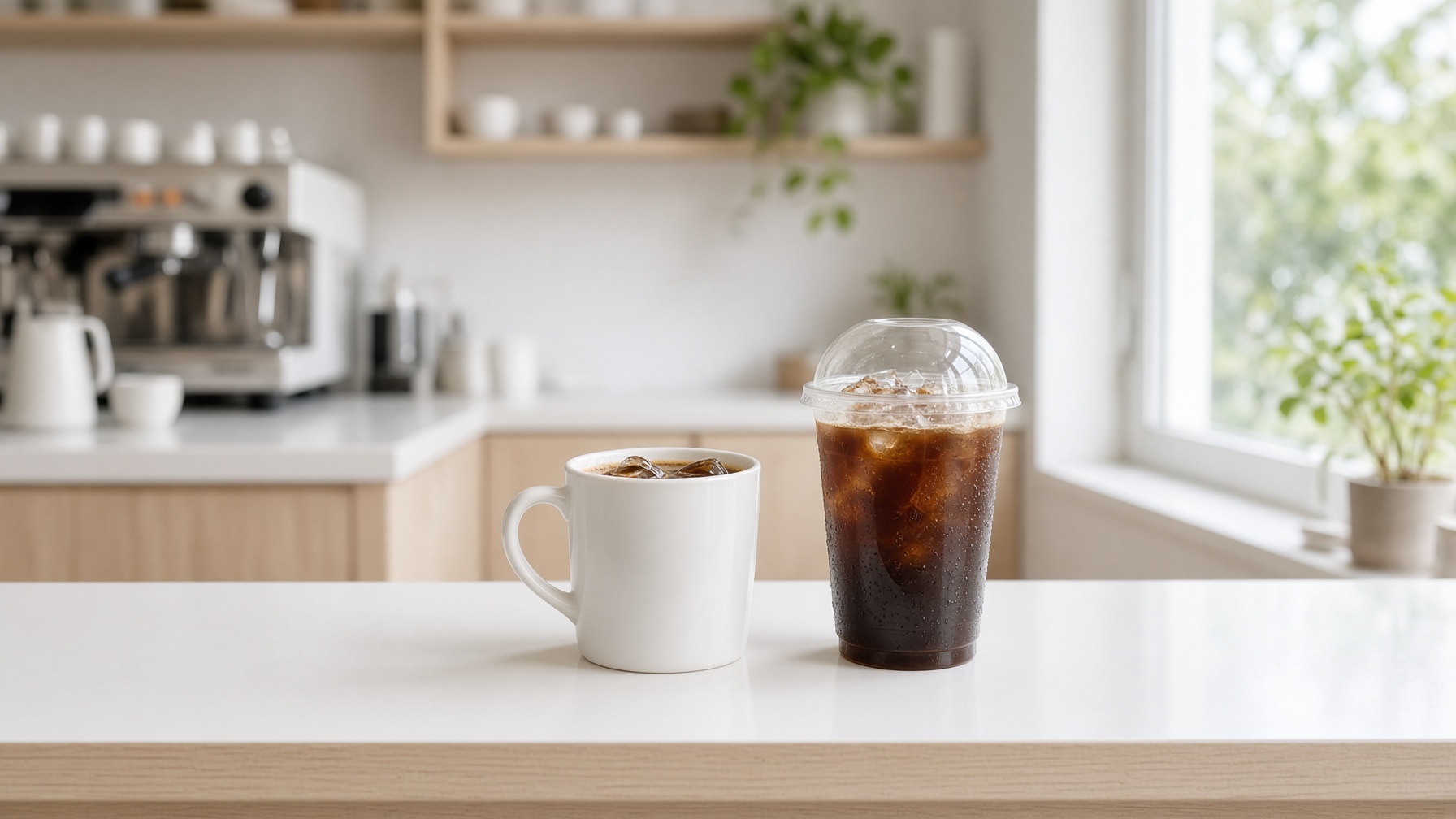
My coffee came in a plastic cup. I sat down and opened my laptop.
About five minutes later, the barista came over. Sorry, she said, but if I'm drinking it in the cafe, the cup has to be swapped.
That's when it clicked. That question earlier was deciding which cup I'd get.
My "yes" happened to be ambiguous. Answering yes to 드시고 가세요? means "I'm staying" — but I think she read my face and heard takeout.
Turns out there's a reason for the two cups
I asked a friend about it. It's not just a preference thing.
If you're drinking in the cafe, they can't give you a disposable cup. It's a rule the cafe has to follow, so the staff can't just let it slide.
So that question wasn't a courtesy. It was a question that needed a real answer. Not one to smile through.
| What I say | What I get | Can I sit down? |
|---|---|---|
| For here | Mug or glass | Yes |
| To go | Disposable cup | No — heading out |
These two lines are all you need
These days I use 포장이요 the most. It's short, so it comes out of my mouth reliably.
테이크아웃 (teikeu-aut) works too — "takeout." Koreans just use the English word.
Oh, and one more trick
If you say it up front when you order, they don't even ask.
"One iced americano, 포장이요." Say it in one shot and there's no follow-up question. This turned out to be my favorite move.
Now
I decide whether I'm sitting down before I walk in.
It's not a big deal, but that day was a little embarrassing. Laptop already open, walking back to the counter to trade cups.
Anyway — how do you order at cafes? I still point at menu names with my finger.